Open Roof vs. Solid Roof
Pergolas use open lattice, beams, or louvers to filter light and release hot air. Ramadas use solid pitched roofing to block direct sun and shed monsoon rain.
At Phoenix Shade Structures Co., this question matters because roof design changes how a Phoenix patio handles sun, airflow, dust, and rain. A pergola filters light through slats or louvers, while a ramada uses a solid, pitched roof for complete overhead shade and weather coverage. Starting with how and when the space will be used helps prevent expensive redesign or rework.
Pergolas use open lattice, beams, or louvers to filter light and release hot air. Ramadas use solid pitched roofing to block direct sun and shed monsoon rain.
Compare peak-hour use, filtered versus full shade, airflow, dust and rain exposure, roof load, available footprint, and budget before choosing.
Choose a pergola for a decorative patio, poolside lounge, or space used in cooler hours. Choose a ramada for full coverage over an outdoor kitchen, pool deck, or commercial patio.
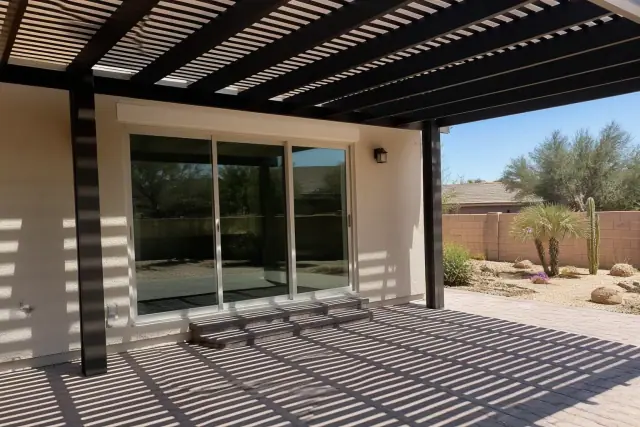
A close view of spaced beams or louvers makes the filtered-light effect clear. It also shows why heat can escape while direct sun still reaches the patio.
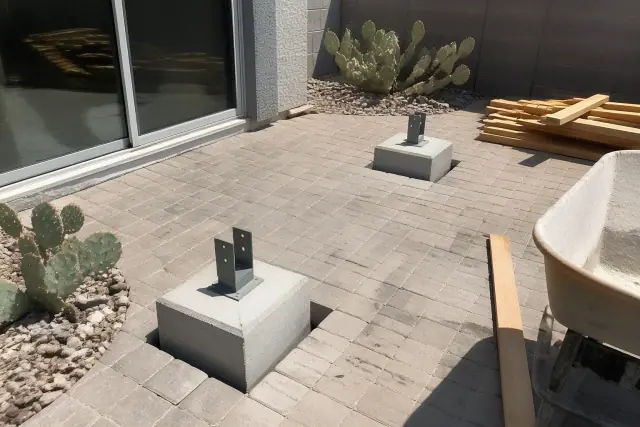
A solid pitched roof over heavier posts and deeper footings explains the ramada's greater structural load. Those components matter for wind uplift and roof-load planning.
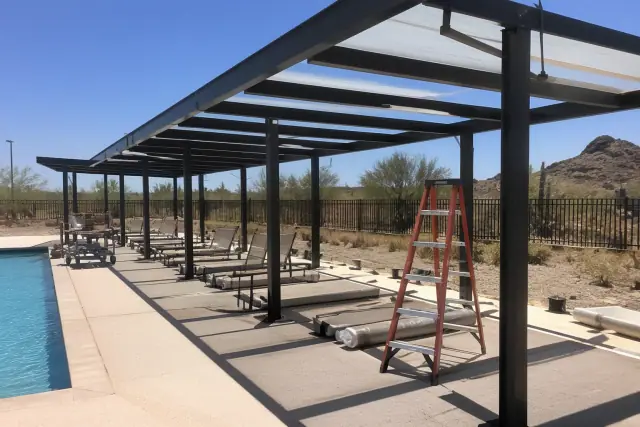
A side-by-side pool setting reveals where partial shade works for lounging and where full roof coverage better protects people, furniture, and outdoor kitchens.
Pergolas generally cost $8,000-$25,000 installed. Quality wood pergolas typically last 15-20 years, while aluminum can last longer and requires less refinishing.
Ramadas generally cost $15,000-$45,000 because of solid roofing, deeper footings, and larger spans. A properly engineered ramada is designed for 25-40 years of service with minimal structural maintenance.
Once permits clear, most residential pergola installations take a few days. A ramada typically takes one to two weeks because of footing cure time, heavier framing, roof decking, and final inspection.
Wood pergolas generally need sealing or staining every two to three years to limit UV-driven bleaching and cracking. Aluminum and vinyl reduce warping and rot concerns, while steel or block ramadas mainly call for roof and gutter checks after monsoon storms.
| Decision Factor | Pergola | Ramada |
|---|---|---|
| Roof design | Open slats, lattice, or louvers | Solid, pitched roof |
| Shade & use | Filtered light for decorative patios and morning or evening use | Full shade for pool decks, outdoor kitchens, and peak sun |
| Structure | Lighter framing and footings | Heavier posts, deeper footings, and often engineered plans |
| Weather behavior | Releases hot air but admits blowing dust and rain | Blocks direct sun and sheds monsoon rain; vents or fans can move trapped heat |
A pergola is an open-roof accent structure, while a ramada is a full-shade shelter rooted in Sonoran Desert and Spanish colonial building tradition. Pergolas may be freestanding or attached and use lighter post-and-beam framing because the roof carries less load. In Arizona, a ramada generally means a freestanding shelter with a solid pitched roof, heavier posts, and footings built for roof and wind loads.
Phoenix sees over 100 days a year above 100 degrees, so time of day and the need for complete shade carry unusual weight. Monsoon haboobs and sudden downpours favor a solid roof when the goal is to shield guests, furniture, or a working outdoor kitchen. Pergola materials include cedar, redwood, pressure-treated pine, aluminum, and vinyl; ramada options include tongue-and-groove decking, standing-seam metal, and block with steel framing. Ramadas commonly need deeper concrete footings and stamped engineering for roof load and wind uplift under Maricopa County building code. A smaller freestanding pergola may receive a simpler permit review, but attachment and footprint can still make plan review necessary for either structure.
A solid patio cover is usually attached to the house, while a ramada offers similar full coverage as a freestanding structure and a pergola keeps the roof open. Converting a typical pergola into a ramada later is usually not cost-effective because the existing framing and footings were not built for solid-roof loads. A ramada generally suits a pool deck or outdoor kitchen used through peak summer heat; a pergola suits a side patio, entry garden, or lounge where filtered light is welcome. Pergola vines need trimming to avoid overloading beams, while a ramada can use ridge vents, gable vents, or ceiling fans to move heat beneath its solid roof.
Share the property's planned use, desired shade level, footprint, and material preferences. A local assessment can compare sun angle, footing needs, permit requirements, and ventilation before the structure is specified.